A stove works all day to cook meals, heat pans, plus boil water quickly. When it starts failing, small ignition issues can quickly turn into burnt food, cold dinners, wasted ingredients, plus frustrating cooking times.
Stove repair helps homeowners fix burner, ignition, heating, flame, valve, switch, electrical, plus element issues before the unit stops cooking completely. Knowing the early signs of failure can help you call for service at the right time.
Why Stove Heating Problems Need Fast Attention?
Many homeowners delay stove repair because one burner still works. That delay can make the problem worse when other burners start failing plus meal preparation becomes impossible.
Common stove problems often begin with weak flames, no heat, clicking sounds, uneven cooking, sparking, knob issues, plus complete burner failure. These issues can affect meal quality, food safety, plus the long-term condition of the appliance.
Stove Burner Not Working
A stove burner not working problem should never be ignored because cooking becomes impossible on that burner. No flame, weak heat, plus delayed ignition can all point to burner failure.
A stove burner not working issue may come from dirty burner heads, clogged ports, faulty ignitors, weak gas supply, damaged electrodes, or control switch problems. A technician can test the system safely before the problem spreads to other burners.
Stove Not Heating
A stove not heating situation can create stress when dinner plans fall apart. Homeowners should check the power supply, gas valve, burner caps, plus electrode alignment before assuming the burner has failed.
If basic checks do not restore heat, service should be scheduled quickly. Internal electrical parts, ignitors, control switches, gas valves, plus heating elements need proper testing from a trained expert.
Stove Ignition Problem
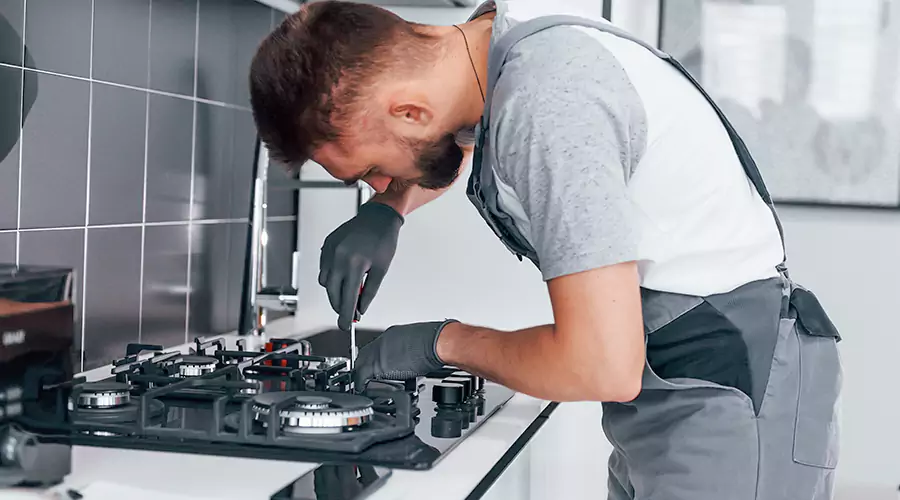
A stove ignition problem can prevent burners from lighting at all. The ignitor must spark or heat up to start the flame. A weak ignitor may click but fail to create enough heat to ignite gas.
Signs include the burner clicking constantly, flame appearing weak, or the burner not heating at all. A trained technician can test ignitor strength plus replace it if needed.
Stove Clicking Nonstop
A stove clicking nonstop situation indicates the ignitor is trying endlessly to create a flame. This continuous clicking wastes energy plus can damage the ignitor over time.
Continuous clicking often indicates a clogged burner port, weak gas supply, faulty electrode, or ignitor failure. Homeowners should clean the burner plus call for service if clicking continues.
Stove Burner Weak Flame
A stove burner weak flame problem can leave meals undercooked plus take forever to finish. The burner may light but produce only a small flame instead of strong heat.
Weak flames often stem from a clogged burner port, low gas pressure, faulty gas valve, or damaged electrode. A technician can measure flame strength plus adjust gas flow to restore proper heating.
Stove Burner Uneven Heat
A stove burner uneven heat issue can cause food to cook inconsistently across the pan. Hot spots plus cold spots indicate uneven flame distribution that needs attention.
Uneven heat often results from a damaged burner head, clogged ports, or misaligned electrode. Rotating pans helps temporarily but doesn't fix the root cause. Persistent uneven heating deserves professional inspection.
Stove Stopped Working
A stove stopped working situation can create stress when dinner plans collapse. Homeowners should check the power outlet, breaker, gas supply, plus burner caps before assuming the unit has failed.
If basic checks do not restore function, service should be scheduled quickly. Internal electrical parts, control boards, ignitors, switches, gas valves, plus heating elements need proper testing from a trained expert.
Stove Sparking
A stove sparking problem can be dangerous plus cause electrical issues. Sparking outside the ignitor area, visible arcs, plus buzzing sounds all indicate electrical problems needing attention.
Sparking may result from loose wiring, damaged electrodes, moisture in the ignition system, or control switch failure. Homeowners should unplug the stove plus call for service immediately.
Stove Knob Problem
A stove knob problem can prevent burners from turning on or cause them to stay on continuously. Knobs may feel loose, break off, or fail to click into position properly.
Loose knobs often indicate worn internal switches, broken valves, or damaged control mechanisms. Homeowners can inspect knobs for visible damage plus call for service if they don't turn smoothly.
Stove Electrical Issue
A stove electrical issue can affect multiple burners plus cause erratic heating behavior. The electrical system powers ignitors, switches, plus control boards.
Warning signs include unresponsive controls, burners not lighting, random heating patterns, or the stove not starting. Electrical diagnostics require specialized knowledge plus testing equipment.
Stove Gas Valve Problem
A stove gas valve problem affects gas flow to the burners. The valve opens to release gas plus closes to stop flow when the burner turns off.
Signs include weak flames, no heat, gas leaking, or the burner not igniting. A trained technician can test valve function plus replace it if needed.
Stove Burner Replacement
A stove burner replacement may be necessary when burners show visible damage, clogged ports that won't clean, or electrodes that won’t spark. Burner heads crack, corrode, plus wear over time.
Homeowners can inspect burners for cracks, corrosion, plus blocked ports. If cleaning doesn't restore proper flame, replacement may be needed to restore even heating.
Stove Heating Element Problem
A stove heating element problem affects electric stoves specifically. The heating element glows red when working plus shows visible damage when failing.
Warning signs include dark spots on the element, sections that don't glow, visible cracks, or blistering. If the element shows damage, it needs replacement to restore proper heating.
Stove Control Switch Problem
A stove control switch problem can cause burners to not turn on or stay on continuously. The switch controls when gas or electricity flows to the burner.
Incorrect switch function can make the burner run too hot or not hot enough. A technician can test the switch plus related components to confirm the cause.
Gas Stove Repair vs Electric Stove Repair
Gas stove repair centers on ignitor testing plus gas valve function. The ignitor must reach proper strength to open the gas valve plus create adequate flame for heating.
Electric stove repair often focuses on heating element replacement plus control switch diagnostics. Electric elements glow red when working plus show visible damage when failing.
Cooktop repair follows similar principles but requires accessing built-in units. Technicians check clearance, ventilation, plus electrical connections during service visits.
Basic Stove Troubleshooting
Safe stove troubleshooting can help rule out simple causes before service. Check the following options carefully:
- Power supply connections and breaker box status
- Gas supply valve alignment
- Burner caps positioning and fit
- Clogged ports and debris accumulation
- Loose or broken control knobs
- Visible electrode alignment and structural damage
Homeowners should avoid opening sealed panels or touching electrical parts. If the stove keeps failing after basic checks, professional diagnosis is the safer choice.
When Emergency Service Makes Sense?
Emergency stove repair may be needed when the unit stops heating completely, shows electrical sparks, smells gas, or causes food safety concerns. Fast action can reduce meal disruption plus prevent damage.
Heating failure should be treated quickly, especially when hosting gatherings. A timely service call can help protect your cooking routine plus appliance investment.
Why Professional Repair Matters?
Reliable stove repair services include inspection, testing, diagnosis, repair options, plus final performance checks. A proper service visit should identify the cause instead of guessing.
Skilled professional stove repair matters because heating systems use electrical parts, ignitors, switches, coils, gas valves, control boards, plus sealed components. Trained service can help prevent repeat issues.
Home Stove Service
Quality home stove repair gives homeowners convenient service without moving a heavy appliance far from its installed location. A technician can check the outlet, clearance, gas line, leveling, ventilation, plus knob alignment.
Trusted residential stove repair also helps protect the appliances families use every day. Service inside the home allows the technician to inspect real operating conditions.
Appliance Repair Technician Support
An experienced appliance repair technician can test the stove, explain the issue, then recommend the best repair option. This helps homeowners understand whether the problem is minor, moderate, or serious.
A technician may also provide maintenance advice after the repair. Cleaning burner ports, checking electrodes, monitoring flame quality, plus proper knob use can support better performance.
Finding Local Repair Help
Searching for stove repair near me can help homeowners find nearby service when heating problems appear. Local service can be helpful when meal planning, food safety, or urgent repairs require a faster response.
Before scheduling, homeowners should look for clear communication, experience with stove systems, plus practical repair guidance. A good repair provider should explain the issue, estimate, parts, plus expected outcome.
Final Thoughts
A failing stove usually shows warning signs before it stops heating completely. Weak flames, no heat, clicking, sparking, uneven cooking, knob issues, plus strange behavior all deserve attention.
Fast professional service can protect meal quality, reduce stress, plus help avoid larger repair costs. If basic checks do not solve the problem, call a qualified technician before the stove fails completely.